If you’ve ever walked through a mid-sized plastics production plant, you’ll notice something almost universal: rows of large injection molding machines, extruders, blow molders, and other core production equipment, each running at full capacity—but many are operating with a disconnect. One of the most common questions I get as a plastic auxiliary equipment supplier is this: Can those smaller, often-overlooked auxiliary units actually work in sync with the big-ticket machines, or are they just add-ons that collect dust when production hits peak? Plastic Auxiliary Equipment
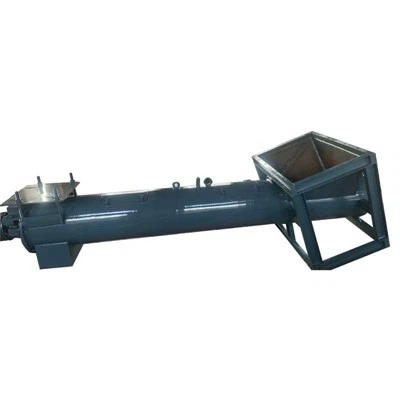
I started in this industry 12 years ago, fixing and modifying auxiliary equipment for small injection molders who’d bought a hopper dryer or a material blender, only to realize it didn’t fit their existing line. Back then, the answer to that question was still a bit of a gray area: many core machine manufacturers designed their units to operate independently, with only basic, manual connections to auxiliary gear. Today, that’s shifted dramatically, and the truth is that plastic auxiliary equipment isn’t just complementary—it’s a non-negotiable part of a cohesive production line, and pairing it with other production machines can boost efficiency, cut waste, and reduce downtime in ways many producers only dream of.
Let’s break down why this works, starting with the most common bottleneck in plastics production: material handling. Most thermoplastics—PET, PP, PE, ABS—absorb moisture from the air, and that’s a huge problem for injection molding and extrusion. If you run wet resin through a mold, you’ll get bubbles, weak structural areas, or even surface defects that lead to thousands of parts being scrapped. Ten years ago, many producers dried resin manually in batch dryers, measuring out 50-pound bags, dumping them into a hopper, and waiting four hours before starting the press. That’s not only labor-intensive, but if your dryer’s control isn’t synced to the injection molder, you might open the hopper too early, letting moisture creep back in, or run dry resin too long, wasting energy.
Today’s auxiliary dryers, especially those with dehumidifying capabilities, can connect directly to an injection molder’s controller via simple RS-485 or Modbus protocols. Let’s say a molder is running a 24-hour shift producing food-grade PET bottles. The dryer’s sensor monitors resin moisture content in real time, and when it hits the exact threshold the molder needs (say, 0.002% moisture), it automatically signals the molder to start the mold cycle. If the line pauses for 10 minutes for a mold change, the dryer ramps down its heat to save energy, instead of running at full blast the whole time. That’s not a hypothetical—we installed this exact setup at a mid-sized packaging plant in Ohio last year, and they cut part scrap rates by 18% in the first three months, just by syncing their desiccant dryers to their 12-ton injection molding lines.
Next up: material conveying, which is another area where pairing auxiliaries with core machines makes a massive difference. Vacuum conveyors, a staple auxiliary, used to be mounted separately on the floor, with hoses leading to each molder’s hopper. But if you have three molders running different resins (say, clear PET for bottles, black PP for caps, and ABS for tool housing), switching between materials used to take 20 to 30 minutes: you’d have to disconnect hoses, blow out residual resin, change filters, and calibrate the blender. Now, centralized vacuum conveying systems connect to all your core machines through a main control panel, with pre-set recipes for each material. Push a button, and the system automatically routes resin from the correct storage silo, purges the line in 90 seconds, and sends the exact ratio of resin to the designated molder. A custom molder in Texas we work with cut their material changeover time by 70% using this setup—last year, they were able to add two new molder lines without hiring extra material handling staff, because the auxiliary equipment was doing the work automatically.
But it’s not just material handling. Auxiliary cooling equipment—like chillers and temperature control units (TCUs)—are often the most underutilized when paired with other machines. I’ve seen plants with 10 injection molders, each with a separate small chiller, running at full load even when only three are operating. That’s a massive waste of energy, because each chiller is only 60% efficient at partial load. Installing a central chiller system, sized to match the total load of all core machines, and syncing it to each molder’s temperature controller, lets the system adjust cooling output per molder. If one molder is running a thin-walled PP part that needs 15°C water, and another is running a thick ABS part that only needs 25°C water, the TCU for each line delivers exactly the water temperature it needs, while the central chiller regulates its overall load to use 20% less energy than individual units. We helped a medical device producer in Indiana calculate that syncing their TCUs to their 8 extrusion lines saved them over $12,000 a year in electricity costs.
Of course, there are hurdles—we’ve seen more than a few producers try to connect old auxiliary equipment to new core machines, only to run into compatibility issues. That’s why choosing auxiliary equipment that’s designed for interoperability is key. Many new auxiliary units are built with universal communication protocols, so they can pair with almost any brand of core machine—Haitian, Engel, Arburg, you name it. But even if you have existing equipment, you don’t have to replace it all. Our team often retrofits older dryers or conveyors with basic control modules that let them sync to new core machine controllers, for a fraction of the cost of buying all new units. We recently worked with a molder in Michigan that had 10-year-old batch dryers and a new line of Arburg injection molders; we installed $8,000 worth of sync modules, and they avoided a $50,000 cost of replacing their dryers.
Another big benefit of combining auxiliary and core equipment is predictive maintenance, which is a huge deal for plastics production, where unplanned downtime can cost tens of thousands of dollars an hour. Modern auxiliary equipment collects real-time data—motor load, air pressure, filter condition, temperature—and that data can be shared with core machine monitoring systems. For example, a vacuum conveyor’s sensor might detect that a hose is starting to clog, or a desiccant dryer’s filter is wearing out, and send an alert to the plant manager’s phone, along with a timeline for when to replace the part. That means you don’t have to stop production mid-shift to fix a faulty auxiliary unit, because you can schedule maintenance during a planned downtime window. A toy producer we work with used this setup to cut unplanned downtime by 22% last year, which let them take on two new client contracts without adding extra machine lines.
I’ve heard the counterargument a lot from small producers: “My line is only two machines—do I even need to pair auxiliary equipment?” The answer is still yes, even for small operations. If you have a single extruder making plastic film, pairing it with a compact material blender and a small chiller, synced together, will cut scrap from wrong resin ratios or uneven material temperature. We work with a 3-person custom shop in Illinois that runs one injection molder making small plastic parts for home goods; they added a syncable blender and dryer for $2,500, and now their scrap rate is 10% instead of 25%, so they’re making more money on the same number of molds.
At the end of the day, plastics production is all about consistency. A core machine can run perfectly, but if the material going in is too wet, or the cooling is uneven, the parts will be bad. Auxiliary equipment is the quiet workhorse that makes sure the core machines do their job right. The key is not just having auxiliary equipment, but designing the line to connect those units seamlessly to your extruders, molders, and blow molders. We’ve found that the most successful lines our clients build are the ones where each component talks to each other, not just operates on its own.
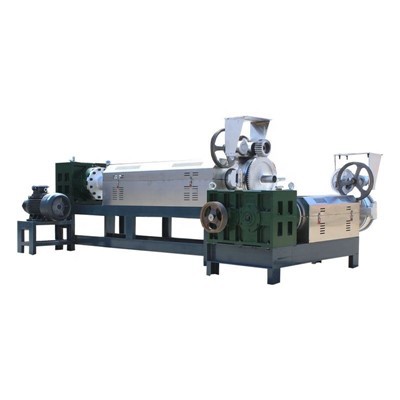
If you’re looking to upgrade your production line, or you’re curious how your existing auxiliary equipment can pair better with your core machines, our team is here to help. We can do a full line assessment, suggest retrofits or new equipment that fits your specific machines, and work with your production team to make sure everything syncs up smoothly, without disrupting your current operations.
Plastic Crushing Equipment References
- European Plastics Converters (EuPC). 2023. “Auxiliary Equipment Integration in Modern Plastics Production.” EuPC Technical Report.
- American Chemistry Council. 2022. “Energy Efficiency in Plastics Manufacturing: The Role of Auxiliary Machinery.” ACC Sustainability Report.
- Society of Plastics Engineers (SPE). 2021. “Interoperability of Auxiliary and Core Production Equipment in Injection Molding.” SPE Journal of Plastics Technology.
- Food and Drug Administration (FDA). 2020. “Guidance on Material Handling and Processing for Food-Contact Plastics.” FDA Manufacturing Guidelines.
- International Society of Automation (ISA). 2022. “Industrial Communication Protocols for Process Control in Plastics Manufacturing.” ISA Standard 95.00.01.
Laizhou Yuening Machinery Co., Ltd.
As one of the most reliable plastic auxiliary equipment manufacturers in China, we warmly welcome you to buy cheap plastic auxiliary equipment made in China here from our factory. All customized machines are with high quality and low price. For pricelist, contact us now.
Address: Yuanjia Village, Luwang, Shahe Town, Laizhou City, Yantai City, Shandong Province
E-mail: yueningjixie@163.com
WebSite: https://www.ynplasticmachinery.com/
