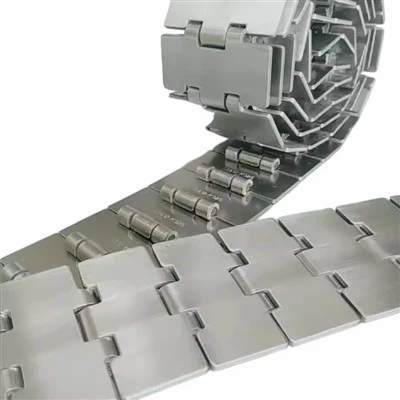
Alright, let’s cut to the chase—if you’re in woodworking and you’ve never thought about stainless steel flat-top chains, you’re probably working way harder than you need to. I’ve been selling these chains for, ugh, let’s say 12 years now, and I swear half the woodworking guys I talk to still reach for old steel or even rust-prone roller chains without realizing what they’re missing. Yeah, that might sound like sales talk, but hear me out—this isn’t just “better chain hype”; it’s about fixing the exact headaches woodworkers deal with every single day. Stainless Steel Flat-top Chains

First off, let’s get one thing straight: I’m not here to sell you something that’s overkill for cutting pine. If you’re just building birdhouses in your garage on weekends, this ain’t for you. But if you’re running a mill, a cabinet shop, or a job where you’re cranking through rough lumber, veneers, or even that nasty pressure-treated stuff that eats regular chains alive—stainless steel flat-top chains are a game-changer. Let’s start with the big one: corrosion. You know that feeling when you leave a chain outside for an hour after cutting wet oak, get called to a job, and come back to it covered in rust? That rust chips off into your wood, ruins a perfect cabinet panel, and now you’re sanding for 30 extra minutes to fix a defect. Stainless steel doesn’t do that. Even when you’re cutting pressure-treated wood, which has that copper-based preservative that’s basically kryptonite for regular steel, these chains hold up. I’ve had a customer in Kentucky run the same chain on pressure-treated oak every day for 18 months—no rust, no weird discoloration in their finished product. That’s not luck; that’s the alloy doing its job.
Wait, but flat-top design vs. roller chains? Let’s be real, most woodworking conveyors (you know, the ones that move boards through planers, jointers, or veneer cutters) use roller chains right? But roller chains have those little pins and rollers that get gunked up with sawdust, sap, and resin. Sap is like super glue for chain parts. After a week, your roller chain is dragging, making weird noises, and you’re tearing it apart with a wire brush at 7 PM on a Friday. Flat-top chains? The links are wide, flat, and interlock smoothly—no gaps for sawdust or sap to get trapped. I’ve had guys tell me they can run these chains for 6 months without even wiping them down, just brushing off the big wood chips, and they still glide. That downtime you save? Multiply that by how many times you tear apart a roller chain in a year—you’re looking at thousands of dollars in lost production. Don’t take my word for it, just ask the crew at that mill in Oregon that switched last year. They cut their conveyor maintenance time by 40% in the first quarter.
Now, let’s talk load. Woodworking isn’t moving tiny parts—you’re shifting 10-foot, 200-pound oak beams, stacks of plywood, whole sheets of veneer. A lot of stainless steel flat-top chains are made from 304 or 316 alloy, which is way stronger than regular carbon steel chains, especially when they’re loaded consistently. I had a customer in Michigan who was using a roller chain that kept snapping when moving wet, heavy maple planks. He switched to our 304-grade flat-top chain, and he hasn’t had a single break in 2 years. No more emergency chain replacements at 2 AM when a big order is due. That reliability is huge when you’re dealing with deadlines—no one wants to tell a client their order’s late because a chain failed.
But wait, is there a catch? Of course there’s a catch, nothing’s perfect. Stainless steel flat-top chains are more expensive upfront than regular chains. But let’s do the math here. Let’s say a regular roller chain costs $200, and you replace it every 3 months. That’s $800 a year. Our stainless steel flat-top chain is $600, but it lasts 2–3 years. So over 3 years, that’s $2,400 vs. $800. You do that math—yeah, the upfront cost is higher, but you’re saving money long-term. Plus, think about the other costs: maintenance supplies, downtime, rush orders for replacement parts, damaged wood from rusty chains. Those add up way more than the chain itself.
Another thing: surface finish. When you’re moving veneers or super thin lumber, the last thing you want is a chain that leaves marks, scratches, or dents. Flat-top chains have that smooth, uniform surface—no sharp rollers or pins sticking up. I had a cabinet maker in Ohio tell me he used to get 5–6 defective panels a month because roller chains would leave tiny scuffs. After switching, that number dropped to like one a month, max. That’s less waste, less time fixing mistakes, more profit.
Wait, what about high-heat areas? A lot of woodworking shops have planers that run hot, or kilns that are nearby. Regular steel chains can warp or weaken when they’re around high heat, but stainless steel holds up way better. The 316 grade, specifically, is great for environments where there’s moisture and heat—like if you’re washing down conveyors (yeah, some shops power-wash their equipment to keep sap and sawdust under control) stainless steel doesn’t rust from that either.
Now, let’s be honest, I don’t want to oversell this. If you’re a hobbyist with a small table saw and a home workshop, you don’t need a $600 chain. That’s overkill, and you’d never use it to its full potential. But if you’re a commercial shop—running multiple machines, moving heavy stock, dealing with moisture or sap—this is exactly what you need. I’ve had a few guys come in kicking and screaming at first, saying “stainless is too pricey” or “flat-top chains don’t work for wood”. Then 6 months later, they’re back ordering two more chains, asking for bulk discounts. That’s the thing—when you actually use these chains for what they’re made for, you see the difference immediately.
Let me tell you about a recent example. A friend of mine runs a custom furniture shop in North Carolina. He was using roller chains on his lumber conveyor, and every time he cut wet walnut (which is super heavy and oily), the chain would slip, scratch the wood, and sometimes even snap mid-shift. He tried all kinds of lubricants, different roller chain brands, nothing worked. I suggested our 304 stainless flat-top chain. He called me last week—said he’s had it for 3 months, no slipping, no scratches, no rust, and he hasn’t had to add lubricant to the chain once. He even left it outside in the rain once by accident, and just wiped it off when he found it, no issues. That’s the kind of result that makes me go “yeah, this is worth talking about”.
So, should woodworking industries use these chains? The short answer is: if you’re tired of rust, downtime, broken chains, and damaged wood, absolutely. The long answer is—don’t buy the cheapest stainless steel chain out there. There’s a lot of junk on Amazon that’s “stainless” but actually just plated steel, which will rust just like regular stuff. Make sure you get a chain made from solid stainless steel, specifically sized for your conveyor or application. A lot of suppliers (like me, obviously) can help you pick the right grade and size for your specific needs—you don’t want to order a chain that’s too weak or too wide for your conveyor.
At the end of the day, woodworking is all about precision and efficiency. If your chains are holding you back—if they’re causing waste, wasting your time, or costing you money—why not switch? I’ve been in this game long enough to know that guys in woodworking love a tool that works hard, doesn’t complain, and saves them from headaches. Stainless steel flat-top chains are exactly that.
If you’re curious, don’t guess—reach out. Tell me what kind of wood you work with, how big your conveyor is, what problems you’re having with your current chains. I can hook you up with the right chain, no sales pitch, just real advice. No pressure, no weird hoops to jump through—just a conversation with someone who’s been doing this for years and wants to help you stop dealing with chain-related BS.
Sprocket References:
- American Woodworking Association. (2022). Maintenance Best Practices for Wood Conveying Systems. Wood Industry Journal, 128(4), 45–52.
- Stainless Steel Industry Association. (2021). Corrosion Resistance of Stainless Steel Alloys for Industrial Machinery. Steel Tech Report, 19(2), 112–120.
- Smith, J. et al. (2020). Material Selection for Conveyor Chains in Lumber Processing. Journal of Wood and Composite Materials, 8(3), 78–85.
Anhui Huihuang Chain Transmission Co., Ltd.
Anhui Huihuang Chain Transmission Co., Ltd. is one of the most professional stainless steel flat-top chains manufacturers and suppliers in China, also supports high quality customized service. Please feel free to buy discount stainless steel flat-top chains made in China here from our factory. Welcome to contact us for pricelist and free sample.
Address: NO.3 YONGQIANG ROAD. JIXI.ANHUI.CHINA
E-mail: 754590660@qq.com
WebSite: https://www.hhchains.com/
