Let’s cut through the jargon—if you’ve ever watched a tractor pull a hay baler, power a grain auger, or spin a road sweeper in a municipal yard, you’ve witnessed one of the most underrated workhorses in agricultural and construction machinery: the power take-off, or PTO. As someone who’s spent 12 years as a tractor supplier (talking to farmers, landscapers, and fleet managers every single day), I’ve lost count of how many times a customer has leaned in at a trade show or called my office and said, “Wait, that thing that makes my attachments work? That’s the PTO?” So today, let’s break down what a PTO actually is, why it’s not just a random tractor part, and how it makes every hour your tractor runs worth more. Tractor
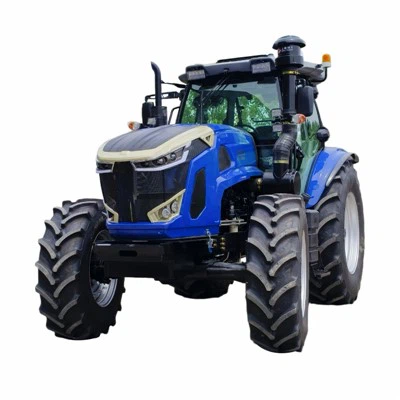
First, let’s get the basic definition right—no stuffy engineering manual language, I promise. A power take-off is a mechanical shaft, usually protruding from the back, side, or sometimes even the front of a tractor, that transfers power directly from the tractor’s engine to an attached implement. Unlike the tractor’s wheels, which use power to move the machine itself, the PTO sends that engine power outward to whatever tool you’re hitching up. Think of it like a tractor’s “work arm for power” – you don’t use it to drive, you use it to turn the parts that actually get your job done. For example, when you fire up a mower, the cutting blades spin because they’re hooked to the PTO. When a hay baler wraps bales tight, that’s the PTO spinning the twine mechanism and the pickup tines. Even the snow blowers on municipal plow trucks rely on a PTO to throw snow, not just the plow’s hydraulics.
Here’s where most new (and even some experienced) operators get confused: PTO power isn’t separate from the tractor’s main engine. It taps into the engine’s rotational power, usually through a separate gearbox that splits torque between the tractor’s wheels and the PTO. That means when you engage the PTO, the engine is still working just as hard—you’re just redirecting a portion of that energy to your attachment, not wasting it. Modern tractors even let you adjust how much power goes to the PTO versus the wheels, which is huge for precision work. For example, if you’re tilling soft soil, you can dial more power to the PTO for the tiller, and less to the wheels so you don’t get stuck. If you’re pulling a heavy trailer, you shift more power to the wheels and still have enough left to run a water pump for spraying crops.
Now, let’s talk about the different types of PTOs, because not all are the same—and getting the wrong one can turn a simple job into a headache. The most common by far is the rear PTO, which sticks out the back of the tractor and is what you’ll use for 90% of light to heavy-duty jobs: mowing, baling, tilling, feeding livestock, or running grain conveyors. Rear PTOs have standard speed ratings, which are non-negotiable for matching to implements. For small garden tractors or compact utility tractors, you’ll see a 540 RPM rear PTO—slow, steady, and perfect for light tools like rotary cutters or small balers. For larger farm tractors, it’s usually a 1000 RPM rear PTO, which spins faster to handle heavier, higher-power implements like large square balers or grain augers that need more speed to work efficiently. There’s also a 540/1000 RPM “dual speed” rear PTO on many mid-range tractors, so you can switch speeds without stopping to re-gear, which saves loads of time mid-job.
But don’t sleep on front PTOs, either. They’re mounted on the front of the tractor, right behind the bumper, and they’re game-changers for jobs where you want weight balance. If you’re running a front-mounted snow blower, for example, the front PTO sends power straight to the blower, instead of pulling that extra weight off the back of the tractor. This keeps the tractor’s front tires on the ground for better steering, which is critical when you’re clearing snow on sloped driveways or narrow municipal streets. Side PTOs are less common, mostly used for specialty jobs like running a side-mounted tree spade or a stationary generator that you want to power without moving the tractor, but they’re a huge win for operators who need specialized tools.
A big point I drill into every new customer I work with: PTO engagement safety is non-negotiable. I’ve seen too many farmers rush to get a job done, skip the basic steps, and end up with a scraped arm or a torn jacket when an unguarded PTO shaft catches on loose clothing. That’s why modern PTOs have built-in safety features: automatic shutoff if you disengage the clutch, guards that cover the spinning shaft when not in use, and even electronic sensors that cut power if something gets tangled in the attachment. Early PTOs were strictly mechanical, so you had to turn the tractor off to engage or disengage them—now, most tractors let you engage the PTO from the cab with a simple button, which is not only faster but also keeps you at a safe distance from the spinning parts. Last year, we installed a new generation of PTOs on our mid-size utility tractors that stop the shaft within half a second if it detects an obstruction—that’s the kind of small detail that keeps people coming back, because it means they go home at the end of the day instead of visiting the local clinic.
Now, why does this matter for someone buying a tractor? Let’s do a quick real-world example. Suppose you’re a small-scale hay farmer with 20 acres, and you’re weighing whether to buy a compact utility tractor with a 540 RPM PTO or a larger farm tractor with a 1000 RPM PTO. The compact tractor is cheaper, but if you ever want to upgrade to a larger round baler (which needs 1000 RPM to spin the pickup and wrapping mechanism fast enough to handle wet hay without jamming), you’ll be stuck. On the flip side, if you’re a landscaper who mostly mows lawns with a 60-inch rotary cutter, a 540 RPM PTO is all you need—you don’t want to pay extra for a 1000 RPM PTO you’ll never use, because that extra gear adds cost and maintenance. That’s where my team and I come in: we don’t just sell tractors—we help you match the PTO (and the entire tractor) to your specific jobs, so you’re not wasting money on features you don’t need, or buying something that can’t keep up when you expand.
I also get asked all the time: how much power does a PTO actually take? The average compact tractor has a PTO output of around 20 to 50 horsepower, mid-size tractors hit 50 to 100 horsepower, and large farm tractors can crank out 150 to 300 horsepower through their PTOs. That might sound like a lot, but let’s put it in perspective: a small rotary mower only needs about 15 horsepower to run, while a large square baler needs 120+ horsepower to compress and wrap bales efficiently. If your tractor’s PTO doesn’t have enough horsepower, the shaft will bog down, the attachment will stall, and you’ll burn out the engine’s gearbox trying to push it. We test every PTO on our tractors under real load conditions—we don’t just advertise “rated power” in a vacuum; we hook up actual implements and see how the PTO performs when you’re working in wet hay, steep fields, or deep snow. That’s why our customers trust us: we stand behind the numbers, because we’ve tested them ourselves.
One common myth I want to bust right now: a PTO is only for agricultural work. That’s so not true. We sell our utility tractors with front PTOs to municipal road departments for snow removal, to landscaping companies for brush hogs and aerators, and even to residential customers who have large acreage and need to run a firewood splitter or a small sawmill. A few years back, we worked with a customer in a rural area who used his tractor’s PTO to power a water pump for his small cattle troughs—he didn’t have access to grid power at his pasture, so the PTO let him move water 24/7 without a separate generator. The PTO is a versatile tool, not just a “farm part” — that’s why it’s one of the most requested features when we talk to first-time tractor buyers.
At the end of the day, the power take-off is what makes a tractor more than just a box on wheels. It’s the link between the engine’s brute force and the work you actually need to get done. If you’re in the market for a new tractor, or you’re looking to upgrade the one you have, the PTO shouldn’t be an afterthought. It’s the difference between finishing a job in an hour and fighting with an attachment all day, between doing the work safely and dealing with unnecessary risks.
If you’re ready to talk through what PTO (and what tractor) is right for your specific needs, my team and I are here to help. We don’t push one-size-fits-all solutions—we listen to how you work, what you need to accomplish, and build a package that fits your operations, not just a sales sheet. Don’t hesitate to reach out to start a conversation about your next tractor investment.
Farm Implement References:
- ASABE Standard S218.5, Power Take-off (PTO) Systems for Agricultural Tractors
- Tractor Industry Association, 2023 Report on Agricultural and Utility Tractor Component Usage
- National Ag Safety Database, Power Take-off Safety Guidelines for Operators
Shandong Ling Ke Industry Group Co., Ltd.
As one of the most professional tractor manufacturers and suppliers in China, we’re featured by quality products and good price. Please rest assured to buy cheap tractor for sale here from our factory. We also accept customized orders.
Address: 50 Meters West of the Connecting Road Between Jiuma Road and Shima Road, Fangzi District, Weifang City, Shandong Province, P.R.China
E-mail: aileenlin@sdlingkegroup.com
WebSite: https://www.lingketractor.com/
