Hey everyone, thanks for popping into my corner of the web—since I’ve been in the food cartoning machine game for over a decade, I get asked the wildest questions, but one that’s come up nonstop lately is: can a food cartoning machine actually handle multi-pack food items? Like, you know, those 6-packs of granola bars, 12-packs of juice boxes, or even the little multi-serve cheese stick packs that fly off grocery store shelves? For years, I’d nod and say “sure,” but now that half our clients are boutique snack brands popping up out of nowhere and big cereal companies retooling lines every other month, I’ve actually dug into the weeds on this—because it’s not just about shoving stuff into a box. It’s about making that work fast, safe, and not turning into a total mess mid-shift. Let’s break this down like I’m sitting across from you at a trade show booth, no stuffy jargon. Food Cartoning Machine

First off, let’s get the basics straight: multi-pack food items aren’t just “more than one thing.” There’s a huge range here. You’ve got shrink-wrapped multi-packs (like those 4 apple sauce cups glued tight together), tray-based multi-packs (the 12-packs of crackers on a plastic tray), even loose, grouped items (like a stack of 5 energy bars held together with a paper band). A lot of people think cartoning machines are just for single items—like a single cereal box, a single candy bar—but nope. Modern ones? They’re built to adapt. But here’s the thing: not all multi-packs are created equal, and that’s where a lot of brands mess up. If you come to me with a shrink-wrapped 8-pack of frozen taquitos, I can set up the machine to grip that shrink wrap just right, but if you show up with a loose stack of 20 mini muffins with a crinkly paper liner, that’s a different ballgame.
Wait, let’s talk about how these machines actually do it, because that’s the key. I see a lot of small snack brands think, “Oh, just make the box bigger and stuff more in.” No. The best cartoning machines for multi-packs have two main parts that make it work: the infeed system and the carton erecting/sealing unit. The infeed is what grabs the multi-pack and lines it up—no tipping, no sliding all over the place. For shrink-wrapped multi-packs, we use vacuum grippers that suck gently on the shrink wrap (no pinching, because food safety is non-negotiable here) and set it down exactly where the carton needs it. For tray-based packs, we use finger guides that line up the tray edges, so it doesn’t shift while the carton closes. And for those paper-band grouped items? We adjust the grippers to fit the paper band instead of the product itself—smart, right? Because you don’t want to squish those mini muffins.
I remember a client from the Midwest a couple years back—small batch craft cookie brand, they were doing these 5-packs of shortbread with a decorative paper band. They’d been doing everything by hand, but their holiday orders blew up, so they came to us panicking because they couldn’t keep up. They thought their only option was to pack single cookies first, then stuff them into a box, but that was doubling their labor costs. We tweaked one of our mid-range machines—nothing fancy, just adjusted the infeed grippers and the timing of the carton flaps—and boom. It was packing the 5-pack directly into the carton at 12 packs a minute, which was way faster than hand packing. They ended up reordering two more within a year because it cut their production time in half and reduced product damage by like 90%. That’s the kind of win I live for.
But here’s the catch that most people don’t realize: food safety. This is non-negotiable, no exceptions. When you’re handling multi-packs, you’re moving more food, so the machine has to be easy to clean—no nooks and crannies where crumbs or juice can get stuck, because that’s a breeding ground for bacteria. All our machines for food (duh, that’s our whole market) are made with stainless steel and have smooth, rounded surfaces, and we design the infeed system to come apart in 10 minutes for a deep clean. I’ve seen a competitor’s machine that looked like a great deal on paper, but it had little crevices where multi-pack debris would get trapped, and a local health inspector shut a client down for using it. That’s a disaster—way worse than waiting a couple extra weeks for a machine that’s actually food-safe for multi-packs.
Another big factor: package consistency. If your multi-packs are all slightly different sizes—like if you’re testing a new batch of granola bars that are a half-inch longer than your last one—your cartoning machine’s going to have issues. Even the best machine can’t adapt super well if every single multi-pack is a unique snowflake. We always tell clients to get their multi-pack dimensions nailed down first. Measure the length, width, height, and even the weight of each one, because weight matters too—if a multi-pack is heavy (like a 6-pack of 16oz soda cans), the machine needs stronger grippers to lift it without dropping it. The Midwest cookie client? They had their 5-packs all exactly the same size, so the machine never jammed—jam-free rate was like 98% during their first run. If their shortbread crumbled a little and each pack was a tiny bit shorter, we could have adjusted the machine’s settings, but consistency makes everything way easier.
Wait, what about different types of cartons? Some brands want a standard straight-end box, others want a tuck-end, or even a printed box with a window to show off the multi-pack. Our machines handle all of that. The carton erecting unit just adjusts—we can switch between box styles in like 15 minutes if you need to run a different product, which is perfect for brands that do seasonal stuff. Like, a chocolate company might run 6-packs of mini bars in a plain box during the year, then switch to a fancy holiday box for the winter. We set the machine up so they can swap that out without a technician on call. No downtime, which is huge for production lines.
I should also call out a common myth: people think multi-pack cartoning is only for big brands. Nope. We have small, boutique brands that only run 500 packs a day, and our entry-level machines handle that no problem. You don’t need a million-dollar line to do multi-packs. Our entry model’s got all the same core features—adjustable infeed, food-safe design, easy cleaning—just on a smaller scale. One client in Austin, Texas, makes these artisanal nut butter packs, 4-packs in a small box, and they started with our entry machine when they had 1 employee, now they’ve got two and run 2,000 packs a day. That’s the kind of growth we love to see.
But let’s be real—there are limits. Not every multi-pack will work on every machine. If you’ve got a really irregular multi-pack, like a bunch of randomly stacked vegetable sticks with no band or shrink wrap, that’s tricky. Those might need a custom infeed system, which isn’t cheap, but it’s doable. Or if your multi-pack is super fragile—like those 3-packs of fresh fruit cups that tip over if you look at them wrong—you might need a slower line, or additional stabilization in the carton, like small inserts that hold each cup in place. We work with clients to figure that out, not just sell them a machine and walk away. A big part of our job is helping you adjust your multi-pack design to fit the machine, or adjust the machine to fit your multi-pack.
I mentioned earlier that food safety is key, but packaging integrity matters too. If you’re packing multi-packs into a carton, you don’t want the carton flap to crush the product, or the multi-pack to shift during shipping. Our machines are calibrated to fold the carton flaps just right—tightly enough to keep the multi-pack in, but not so tight that you have to force it. We test every machine on a sample of your product before it leaves our shop, actually. That’s how we catch issues before they get to your line. Last month, we had a client from Seattle with a line of organic apple sauce multi-packs, and their sample packs had a slight curve to the shrink wrap. We adjusted the vacuum gripper pressure, so now it picks up every single one without the wrap wrinkling, which would have been a problem when customers opened the box.
So, circling back to the original question: can a food cartoning machine handle multi-pack food items? The short answer is yes, absolutely—but only if you pick the right machine, get your multi-pack specs nailed down, and work with a supplier who actually knows what they’re doing (shoutout to me, obvi). It’s not a one-size-fits-all thing, but modern cartoning machines are way more adaptable than they were 5 or 10 years ago. They don’t just work for single items—they’re built to keep up with the way brands are packaging products now, with all those multi-packs that shoppers love because they’re cheaper and easier.
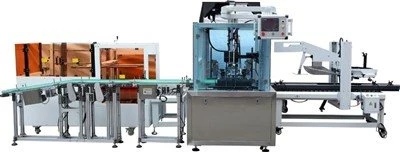
If you’re a brand that’s tired of hand-packing multi-packs, dealing with jams, or stressing about food safety, don’t overcomplicate it. The first step is to figure out exactly what your multi-pack looks like—measure it, count how many items are in it, note if it’s shrink-wrapped, tray-based, or loose, and then reach out to us to chat. We can walk you through different machine models, show you sample tests, and even help you adjust your packaging if needed. No pushy sales stuff, just real talk about what will actually work for your production needs. At the end of the day, we’re here to help you make your line run smoother, not sell you a machine that sits in your warehouse.
Drug Bagging Machine If you’ve got questions—whether it’s about multi-packs, food safety, jam rates, whatever—hit me up. I don’t do sales fluff, I tell you like it is: what works, what doesn’t, and what’ll save you time and money. That’s why our clients keep coming back, and why we’ve been around this long. Multi-pack cartoning isn’t some super fancy, unachievable thing—it’s just another part of what good cartoning machines do. You just need the right setup, the right specs, and a supplier who’s actually in the know.
References
- Food and Drug Administration (FDA). (2022). Food Safety for Manufacturing Facilities: Equipment Design and Sanitation Requirements. U.S. Department of Health and Human Services.
- Packaging Digest. (2023). "Multi-Pack Cartoning: Adapting to Flexible Packaging Trends for Food Brands."
- Institute of Food Technologists (IFT). (2021). "Advances in Food Processing Equipment for Small and Medium-Sized Food Businesses."
- National Federation of Independent Business (NFIB). (2022). "Growth Strategies for Small Food Brands: Automating Packaging Lines."
Zhejiang Tuoyu Packaging Machinery Co., Ltd.
Zhejiang Tuoyu Packaging Machinery Co., Ltd. is one of the most professional food cartoning machine manufacturers and suppliers in China. With abundant experience, we warmly welcome you to wholesale durable food cartoning machine made in China here from our factory. Good service and quality products are available.
Address: Workshop No.12, No.11-19, Xinbin Road, Binhai New Area, Pingyang County, Wenzhou City
E-mail: 15868789201@163.com
WebSite: https://www.tuoyupack.com/
