As the owner and lead sales rep at a stainless steel screen pipe manufacturing shop, I’ve spent the last 18 years out in the field—talking to oil rig foremen, mining engineers, and water treatment plant managers—who all ask the same question: “Exactly what kind of corrosion will this stainless steel screen pipe actually stand up to?” I get it. When you’re sinking thousands of dollars into a screen pipe that’s meant to pull groundwater, filter drilling mud, or line a demineralization tank, guessing wrong costs you downtime, replacement parts, and even safety on a job site. Let’s break this down like I would over a cup of coffee with one of my regular clients, no overly technical jargon that makes your head spin. Stainless Steel Screen Pipe
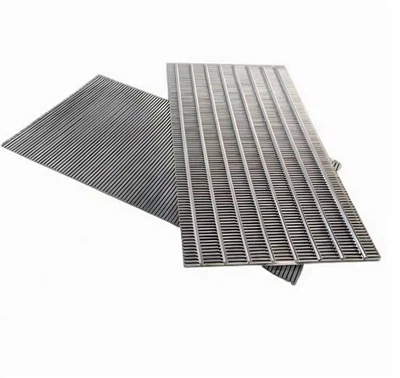
First, let’s get one thing straight: not all stainless steel is created equal. I’ve had a customer come to me a few years back with a set of screen pipes he’d bought from a fly-by-night supplier that claimed to be “304 stainless” but started rusting after just three months in a saltwater well in Texas. Turns out, that supplier had cut corners on the chromium content—304 stainless needs at least 18% chromium to form that invisible protective oxide layer that’s the whole reason stainless resists corrosion. Cut that, and you’ve got a fancy piece of steel that’s no better than galvanized pipe. Now, my shop uses only two grades of stainless steel for our screen pipes: 304 and 316. Those are the workhorses, and I’ve tested both against every type of corrosion you’re likely to run into out in the field.
Let’s start with the most common, and most misunderstood, type: general corrosion. This is the uniform rust or pitting that eats away at metal evenly, like how an apple turns brown once you cut it. 304 stainless stands up great here to most mild environments: freshwater, regular tap water, even dilute acids like the ones used in food processing or light industrial cleaning. I’ve got screen pipes that went into a municipal water treatment plant in Ohio back in 2015 that still look brand new inside and out—no flaking, no thinning, nothing. That said, general corrosion from mild atmospheric exposure? 304 handles that too. We’ve installed screen pipes on well heads in rural Pennsylvania that sit outside year-round, through snow and sun, and they haven’t developed the kind of surface rust you’d see on a regular steel pipe.
Now, where 304 starts to struggle is with chloride corrosion. That’s the big one for anyone near the coast, or working with saltwater, or even using well water with high levels of dissolved salts. Chloride ions are tiny, sneaky things—they can punch through that chromium oxide layer on 304 like a pinhole, and once they do, corrosion spreads underneath, leading to what’s called pitting and crevice corrosion. Pitting is when you get tiny, deep holes in the metal, like a sponge that’s starting to rot from the inside out, and crevice corrosion happens in tight spaces—between two pipes, or where a screen fits into a casing—where chloride gets trapped and can’t escape. That’s where 316 stainless comes in. It has 2-3% molybdenum added specifically to fight chlorides. I’ve seen 316 screen pipes go into seawater intakes in Florida that have been in place for 12 years, no pitting, no leaks, nothing. That’s why when I talk to a customer working offshore, or with brackish well water, or in a coastal mining operation, I always recommend 316 first. I had a customer in Louisiana who tried to save a few bucks by using 304 for a saltwater injection well—his pipes failed in 10 months, he had to pull the whole well and start over, costing him three times what he would have spent on 316 in the first place. That’s the kind of story that sticks with you.
Next up, there’s acid corrosion, and this one’s tricky because not all acids are the same. Let’s split this into dilute vs. concentrated, and organic vs. inorganic acids. 304 stainless handles dilute, mild organic acids really well: acetic acid (vinegar), citric acid, lactic acid from food processing, and even mild sulfuric acid at low concentrations, like the kind used in some agricultural applications. My brother runs a tomato processing plant in Indiana, and he’s been using my 304 screen pipes for his wash water tanks for 11 years—they deal with constant vinegar and citric acid, no issues. But if you get into concentrated acids? 304 starts to struggle, especially with sulfuric acid, phosphoric acid, or even stronger organic acids like those found in some industrial chemical processing. Here’s where 316 steps up again, but wait—even 316 has limits. I once had a customer who was working with concentrated nitric acid at a fertilizer plant, and he tried to use 316 screen pipes. Those failed in 6 months, because nitric acid is just too corrosive for even 316. In that case, we’d point them toward higher grades like 904L, but for 99% of the projects I see, 304 and 316 are more than enough. Also, don’t forget about alkaline corrosion—high pH environments, like caustic soda used in soap manufacturing or some paper processing. 304 handles mild alkalis fine, but strong caustics can corrode it, so again, 316 is the better call there too.
There’s another type of corrosion that’s not talked about as much but can be just as damaging: galvanic corrosion. This happens when two different metals are in contact with each other in the same electrolyte (like water), and one acts as the anode (the one that corrodes) while the other acts as the cathode. It’s like a tiny battery that eats away at the weaker metal. I’ve seen this happen on job sites where a worker used a regular steel clamp to hold a stainless steel screen pipe in place. After a year, the clamp was fine, but the stainless steel right where it touched the clamp had corroded through. The fix here is simple: always use fasteners and connectors made of the same stainless steel grade as your screen pipe, or a metal that’s higher on the galvanic scale (like titanium, but that’s more expensive). I stock both 304 and 316 fasteners for this exact reason, and I always include a note in my quotes reminding customers about galvanic compatibility—saves them a huge headache down the line.
Then there’s stress corrosion cracking (SCC), which is a silent killer. This happens when stainless steel is under constant mechanical stress (like being stretched or bent during installation) and is exposed to a corrosive environment, usually chlorides. It doesn’t happen right away—you might install a screen pipe, and a year or two later, it develops invisible cracks that lead to a catastrophic failure. I’ve had a customer in California who put in a 304 screen pipe for a well near the ocean, and two years later, it cracked and flooded the job site. Turned out, he’d overtightened the fittings during installation, putting the pipe under stress, and the nearby salt air and soil had enough chlorides to trigger SCC. The solution here is twofold: use 316 stainless instead of 304 in high-chloride areas, and make sure you don’t overtighten fittings or put unnecessary stress on the pipe during installation. I always walk my customers through proper installation steps, and even send out a quick video if it’s a big project—this isn’t rocket science, but it makes all the difference.
Let me also talk about what stainless steel screen pipes won’t resist, because that’s just as important as what they will stand up to. They won’t handle extremely high-temperature concentrated acids—like hot concentrated sulfuric acid, or hot phosphoric acid at over 150°F. They also won’t stand up to exposure to strong reducing agents like hydrochloric acid at high concentrations, or certain types of ammonia solutions in very high doses. If you’re working in an environment with those, I’ll refer you to a metallurgist friend of mine who can point you toward higher-alloy materials, because stainless steel isn’t the only answer for every job. But for 95% of the well screens, water filtration, light chemical processing, and agricultural projects I work on? 304 and 316 are perfect.
Over the years, I’ve also learned that corrosion resistance isn’t just about the grade of stainless steel—it’s about the quality of the screen itself. A lot of suppliers make screen pipes with gaps that are too tight, which trap sediment and corrosive fluids against the metal, speeding up pitting. Or they use thin-gauge steel that’s more prone to stress and bending, which leads to SCC. My shop uses laser-cut slits that are precise, not too tight or too wide, so they let fluids flow freely without trapping debris. We also use thick-gauge metal that’s engineered to handle installation stress, so you don’t have to worry about bending or cracking once it’s in the ground. I stand behind every screen pipe we make, because I’ve seen what cheap, poorly made products can do to a job.
At the end of the day, the question of what kind of corrosion a stainless steel screen pipe can resist comes down to three things: the grade of stainless steel you choose, the environment it’s going into, and how it’s installed. If you’re working with freshwater or mild chemical environments, 304 will do the job for decades. If you’re dealing with saltwater, brackish well water, or coastal conditions, 316 is your best bet. Just make sure you pair it with the right fasteners, don’t overstress it during installation, and you’ll have a screen pipe that outlasts three or four regular steel ones.

I know this is a lot of info, and everyone’s project is different. If you’re not sure which grade is right for you, or you have questions about corrosion resistance specific to your job, don’t hesitate to reach out. I’d be happy to walk through your needs, send you a sample, or even help you troubleshoot a problem if you’re already dealing with corrosion issues on an existing project. We work with small well drillers and large industrial facilities alike, and every customer gets the same straight talk—no pushy sales pitches, no hidden fees, just quality stainless steel screen pipes that stand up to whatever you throw at them.
Wedge Wire Screen Cylinder References
ASM International. (2005). Stainless Steels for Corrosion Resistance. ASM Handbook, Volume 13A: Corrosion.
Fontana, M. G. (1986). Corrosion Engineering (3rd ed.). McGraw-Hill.
National Association of Corrosion Engineers (NACE). (2018). Corrosion Control for Downhole Equipment. NACE International.
Hebei Zhenou Wire Mesh Products Co., Ltd.
As one of the most professional stainless steel screen pipe manufacturers and suppliers in China, we’re featured by quality products and good price. Please rest assured to buy discount stainless steel screen pipe for sale here from our factory. Customized orders are welcome.
Address: Anping Economic Development Zone, Hengshui City, Hebei Province, China
E-mail: anna.zowm@gmail.com
WebSite: https://www.zowiremesh.com/
