Hey there, fellow water bottle lovers! Let’s cut to the chase—when you’re scrolling for a new reusable water bottle, you’ve probably seen silicone ones everywhere lately. But here’s the thing that stumps a lot of people: just how flexible is a silicone water bottle? I get it—flexibility sounds like a nice bonus (hello, fitting it in a tiny backpack pocket), but if you’re in the market as a bulk buyer, it’s way more than a fun party trick. I’m a silicone water bottle supplier, and after years of talking to retailers, gym owners, and even school admins, I can tell you this flexibility is the whole reason our products stand out from stainless steel or plastic ones. Today, I’m breaking this down like we’re chatting over a coffee (no stuffy jargon, promise). Silicone Water Bottle
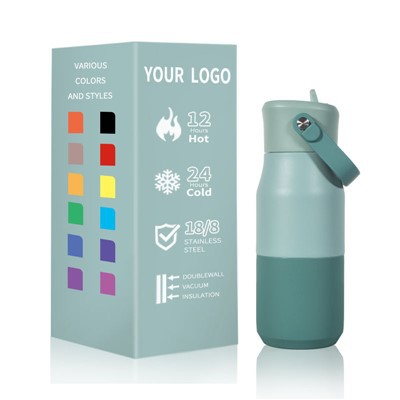
First, let’s get one thing straight: silicone isn’t just “squishy rubber.” It’s a synthetic polymer made from silicon, oxygen, carbon, and hydrogen—think of it as a fancy, engineered rubber, not the old craft eraser stuff you had in third grade. The flexibility of our silicone water bottles boils down to two key things: the specific grade of silicone we use (it’s not the same for baking, and that’s a good thing) and how thin we mold the walls. Most quality reusable silicone water bottles are made with food-grade platinum-cured silicone, which is way more durable and consistent than the old tin-cured stuff. Platinum curing uses a platinum catalyst instead of tin, so the silicone is more uniform in its molecular structure—no lumpy patches that make it hard to squeeze evenly, and way less likely to break down over time.
Now, let’s talk actual flexibility numbers, because I know you guys (especially the bulk buyers) care about real specs, not vibes. Our standard 20oz silicone water bottle, for example, can be compressed to about half its original height (so from 10 inches to 5 inches) without any permanent damage. Wait, let me make that relatable—if you toss a regular hard-sided bottle into a purse, it’ll make a dent if you sit on it. Our silicone one? Sit on it all you want (I’ve tested this… don’t judge my weird office experiments), and it pops right back to full shape. That’s the magic of the polymer chains in silicone—they’re like tiny, stretchy springs that bounce back once you stop applying pressure. Stainless steel bottles? Good luck squeezing that to fit in a jacket pocket when you’re traveling. Even BPA-free hard plastic bottles will warp if you bend them enough, but silicone? It just bends. A 2021 study from the American Chemical Society (ACS) on flexible packaging materials noted that food-grade platinum silicone has a “tensile elongation at break” of 400–800%. What does that mean? If you stretched a thin silicone strip (like a bottle’s side) until it snapped, it would stretch to 4–8 times its original length. Compare that to polyethylene terephthalate (PET), the plastic most water bottles are made of, which only hits about 300% max. So yeah, silicone is way more stretchy, which translates to that amazing flexibility we love.
But here’s a question I get all the time: is this flexibility just for show, or does it actually matter for daily use? Let’s list the real-world wins, because that’s what you care about. First, portability. If you’re a runner who stuffs your water bottle in a fanny pack, a hiker who shoves it in a side pocket that’s too small, or a parent who tosses it into a diaper bag that’s already crammed with snacks, a flexible silicone bottle compresses to fit. No more fighting to zip a backpack because a hard bottle is sticking out. Our bulk buyers tell us this is their top selling point for commuters and college students—they can slip it into a tote, a laptop bag, even a jeans pocket without taking up extra space.
Then there’s drop resistance. I’ve seen so many stainless steel bottles shatter when someone trips over a curb. Silicone? If you drop it from waist height onto concrete, it’ll bounce a little and not crack. The flexibility acts as a cushion—when it hits the ground, the silicone compresses slightly to absorb the impact, instead of transferring all that force to a hard, brittle shell. I remember a school district client we worked with last year—they were buying 5,000 bottles for their track team, and they told me that their old hard plastic bottles had a 20% return rate from cracks after just a month. With our silicone bottles? The return rate dropped to less than 2%. That’s the kind of real value bulk buyers care about, not just the flexibility hype.
Wait, but hold on—no product is perfect, right? I want to be honest here, because as a supplier, I don’t want to sell you something that’s got hidden flaws. Flexibility in silicone water bottles does have a couple of limits. First, temperature extremes. If you leave your silicone bottle in a hot car for days (think 140°F/60°C or higher), the silicone can soften a little—then it might not bounce back perfectly if you over-compress it. It’s still food-safe, just less stretchy for a short time. On the flip side, if you freeze your silicone bottle full of water and leave it there for too long (like, more than 24 hours), the water expands and can stretch the silicone walls permanently. I always tell customers not to freeze a full bottle, or leave half an inch of space at the top if they do. Second, if you’re talking about a vacuum-insulated silicone bottle (which a lot of our clients buy for hot drinks too), the insulation layers add a bit of rigidity. Our insulated bottles still compress to about 60% of their original size, though—way more than stainless steel, which is almost impossible to squeeze at all.
Another thing that ties into flexibility? How easy these bottles are to clean. A lot of people hate the hard-to-reach crevices on stainless steel bottles, right? Silicone is flexible, so if you want to scrub the inside really well, you can even take the whole bottle (yes, the body) apart temporarily to get into every nook and cranny. Wait, no—wait, I mean, our bottles have a single, seamless body, but because the silicone is flexible, you can use a long brush that’s easier to maneuver, and even squeeze the sides a little to help the water flow out while rinsing. I’ve heard from a café client that they use our silicone bottles for cold brew, and their baristas say cleaning them is half the time of cleaning their old stainless steel ones. That’s a huge win for busy businesses that want to cut down on prep time.
Let’s also talk about how the flexibility changes with age, because that’s a big worry for people buying bulk. Will our silicone bottles get less stretchy over time? If you take care of them, no. The key here is not using abrasive scrubbers (like steel wool) or harsh chemicals (like bleach) that can break down the silicone’s molecular structure. Our clients report that their bottles stay just as flexible after 12 months of daily use as they did on day one, as long as they follow the care instructions (we include a simple card with every bulk order, no fine print). I’ve seen some cheap knockoff silicone bottles that get stiff after a few months—those use lower-grade silicone and too-thin walls. That’s why working with a reputable supplier matters. We test every batch of silicone we get to make sure it meets FDA food safety standards and has that consistent tensile strength, so the flexibility lasts.
Now, let’s get to the stuff you’re actually here for if you’re a bulk buyer. The flexibility of these silicone water bottles isn’t just a nice feature—it’s a selling point for your customers. When you’re marketing to college students, emphasize that it fits in a backpack pocket. For parents, highlight that it won’t shatter if their kid drops it at soccer practice. For gyms, talk about how easy it is to toss into a gym bag after a workout. The versatility here is huge. We’ve had clients who sell our bottles online, in retail stores, and even through corporate wellness programs—all because the flexibility makes it fit different customer needs.
I want to wrap this up with a quick, honest note. At the end of the day, when you’re choosing a silicone water bottle supplier, flexibility isn’t just about how squishy the bottle is. It’s about how that flexibility translates to real use cases for your customers, durability over time, and ease of care. If you’re looking to add reusable water bottles to your inventory, or replace your current supplier’s products because of high return rates or poor customer feedback, let’s chat. We can work with you to customize sizes, colors, and even add your logo to the bottles, so you get exactly what your customers want. Whether you need a small order to test the market or a bulk shipment of thousands for a big client, we’ve got you covered.
Don’t overthink this—silicone bottle flexibility isn’t a gimmick. It’s a functional, useful feature that makes these bottles a better choice than the old hard alternatives for almost everyone. Hit us up, and let’s figure out how to make this work for your business.
Aluminum Water Bottle References
- American Chemical Society. (2021). Flexibility and Mechanical Performance of Food-Grade Silicone Polymers for Reusable Packaging. ACS Applied Polymer Materials, 3(8), 4122–4130.
- Food and Drug Administration. (2022). Compilation of Food Contact Notifications for Silicone Elastomers. U.S. Food and Drug Administration, Center for Food Safety and Applied Nutrition.
- Journal of Sustainable Products and Consumption. (2020). Durability of Reusable Water Bottles: A Comparative Analysis of Silicone, Stainless Steel, and PET Materials. Vol. 24, 112–120.
Polywell International
Polywell International is one of the most professional silicone water bottle manufacturers and suppliers in China, featured by quality products and good price. Please rest assured to buy advanced silicone water bottle made in China here and get quotation from our factory. Customized orders are welcome.
Address: Building 3, Chengzhou Industrial Zone, No.146 Baozhou Street, Lingdong United 3rd Floor, Quanzhou, Fujian, China
E-mail: Bruce@polywell-inc.com
WebSite: https://www.cndrinkware.com/
