As a gear skiving machine supplier, I get asked this question all the time on our weekly tech support calls and at industry trade shows: “What’s the actual role of the worktable in a gear skiving machine, and why does it matter more than just a rotating platform?” For years, I’ve watched new machinists and even some seasoned production managers brush off the worktable as a generic part—until they’re dealing with a batch of helical gears that come out misaligned, or a skiving operation that cuts 10% slower than expected because the table can’t hold its position. Let me break this down, from the basic function every operator should know to the critical details that separate a good worktable from one that limits your whole process. Gear Skiving Machine
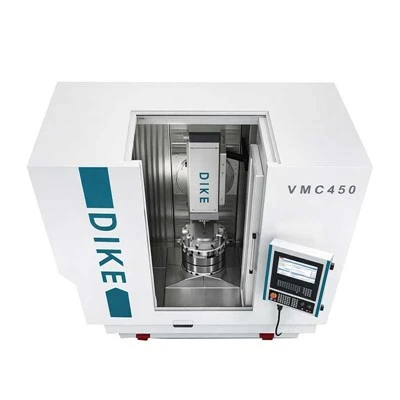
First, let’s start with the core purpose of the worktable, because it’s not just there to spin the workpiece. In gear skiving, the whole process relies on synchronized rotation between two parts: the skiving cutter and the gear blank (the workpiece you’re cutting). That’s called “interpolation sync,” and if either part’s rotation is off even by a fraction of a degree, you get a tooth profile that’s too thin in one spot, too thick in another, or a helical angle that’s not consistent across the whole gear. The worktable is what drives the workpiece’s rotational axis—so it’s not just a support; it’s a precision axis that performs half the kinematic math of every skiving cut. I remember a customer in automotive parts manufacturing called us last year, panicking because their line for differential gears was down. Their old worktable had a worn worm gear, and the sync between cutter and workpiece was off by 0.08 degrees. That might sound tiny, but on a 100mm diameter gear, that translated to a 0.02mm error in tooth spacing—enough to make the differential whine and fail quality checks. We replaced their worktable in 4 hours, and their line was back at full output the same day. That’s the kind of impact this part has that most people don’t see until it breaks.
Next, the worktable’s accuracy is non-negotiable, and that breaks down into three key specs: rotational positioning, runout, and load capacity. Let’s talk about positioning first. When you set up a new gear job, you have to tell the skiving machine what tooth count you’re cutting, what pitch, and what helical angle. The worktable has to hold that rotational position within microns for every single tooth cut. If it drifts even a little mid-cut, you get a “skipped tooth” or a misaligned profile. Our worktables use high-precision rotary encoders—resolution down to 0.001 degrees—because we’ve tested cheaper table options that only have 0.01 degree resolution. For a small industrial gear with 20 teeth, that 0.009 degree difference adds up to a 0.03mm error across the whole gear face, which is enough to fail ISO quality standards for automotive gears.
Then there’s runout—radial runout and axial runout, specifically. Radial runout is how much the workpiece wobbles side to side as it spins, and axial runout is how much it moves up and down. In gear skiving, the cutter is engaged at a slight angle to the workpiece’s face, so any wobble will make the cutter cut deeper on one side of the tooth than the other. We measure our worktables to have a maximum radial runout of 0.002mm and axial runout of 0.001mm, which is 5 to 10 times stricter than industry minimums. I once visited a job shop that was using a competitor’s mid-range skiving machine, and their worktable had 0.01mm radial runout. They were producing garden tractor transmission gears, but 15% of them were being rejected for noisy operation. They upgraded to our machine’s worktable, and that rejection rate dropped to less than 1%—no other changes to their process. That’s a direct result of the worktable’s runout spec.
Load capacity is another part that gets overlooked, especially for heavy workpieces. If you’re cutting large gears for construction equipment, wind turbines, or agricultural machinery, the worktable has to support a workpiece that might weigh 500kg or more—while still maintaining its rotational accuracy. A lot of lower-end worktables use a single row roller bearing, which can deflect under heavy load, leading to that runout we talked about. Our worktables use a double row angular contact bearing design, which distributes the load evenly across the entire table surface, so even with a 600kg workpiece, runout stays under our 0.002mm limit. I’ve seen customers try to cut a 400kg gear on a machine with a single row table, and the table deflected 0.015mm during the cut—resulting in a scrapped gear and damaged cutter. The worktable isn’t something you want to skimp on when handling large workpieces.
Now, let’s get into the more specific roles that make gear skiving different from other machining processes, like milling or turning. Unlike a lathe worktable that only has to hold a part stationary while it spins, or a milling table that moves in X and Y axes, a gear skiving worktable has to do something called “helical interpolation” along with rotational sync. When you’re cutting a helical gear, the workpiece has to rotate and move along its own axis at the same time, matching the motion of the skiving cutter. That’s called “lead synchronization,” and the worktable’s axis control is what drives that linear motion along with rotation. If the worktable’s linear axis is not aligned perfectly with its rotational axis, the helical angle of the gear will be inconsistent—so one end of the gear has a 15 degree helical angle, and the other has 14.8 degrees, which makes the gear fit poorly in its mating assembly. We calibrate every single worktable we supply to within 0.005mm of axial alignment, because we’ve found that even a 0.01mm offset in that lead axis leads to a 0.2 degree helical error over a 100mm gear face.
Another key role of the worktable is in clamping, which is more critical for skiving than for most other processes. Skiving is a high-force cutting process—cutter loads can be 2 to 3 times higher than gear hobbing, for example—because the cutter is engaged at an angle, removing material in a more aggressive way. The worktable’s clamping system has to hold the workpiece rigidly in place, with no movement, even under that high cutting force. If the workpiece shifts even 0.01mm during a skiving pass, you’ll get a “tooth profile error” that’s impossible to correct with post-cut grinding. That’s why our worktables come with hydraulic clamping systems that apply uniform pressure across the entire workpiece surface, not just at a single point. We tested a mechanical clamping system a few years ago, and it worked fine for small gears, but for large 500kg workpieces, the clamping pressure was uneven, leading to 3% of gears being scrapped for movement. We switched to hydraulic clamping, and that scrappage rate dropped to zero for all our customers.
Wait, I also need to talk about maintenance, because that’s a big part of the worktable’s role over time. A lot of operators think the worktable is a “set it and forget it” part, but it needs regular upkeep to keep its accuracy. The worm and gear drive inside the worktable, which transfers rotational motion to the workpiece, needs lubrication with a high-performance gear oil—regular grease doesn’t cut it for high-precision work. We recommend changing the worktable’s lubricant every 500 operating hours, and checking the worm gear backlash every 2000 hours. Backlash is the tiny gap between the worm and gear, which causes the table to move slightly before it starts rotating in the opposite direction. In gear skiving, backlash leads to inconsistent rotational sync, which ruins gear quality. I had a customer in the aerospace industry who skipped lubricating their worktable for 10,000 hours, and the backlash increased from 0.002mm to 0.02mm. They didn’t notice until they were cutting critical landing gear gears, which failed a load test because of the sync error. We reconditioned their worktable, replaced the worm gear, and now they follow our maintenance schedule to the letter.
Now, let’s address a common misconception: some operators think that as long as the main machine’s control system is accurate, the worktable doesn’t matter. That’s just not true. The control system sends commands to the worktable, but it’s the worktable’s physical components—its bearings, drive system, clamping, and mechanical stability—that execute those commands. A $10,000 control system paired with a $2,000 worktable will never perform as well as a $5,000 control system paired with a $15,000 precision worktable. We see this all the time in used equipment markets: people buy a cheap skiving machine to save money, only to realize a year later that the worktable is so inaccurate they can’t make anything above grade 8 gear quality (ISO standards, that is—grade 5 is the high-end for automotive use). It’s not that the control is bad; the worktable is the bottleneck.
So what should you look for when evaluating a worktable for your gear skiving operation? First, check the rotational positioning resolution—aim for at least 0.001 degrees, preferably lower. Second, confirm the runout specs: radial runout under 0.002mm, axial under 0.001mm. Third, look at the load capacity, and make sure it’s rated for the heaviest workpiece you’ll cut, plus 20% extra for safety. Fourth, check the clamping system: hydraulic is non-negotiable for high-volume, high-force operations. Fifth, ask about maintenance: if the worktable requires special tools or frequent replacement of expensive parts, that will add to your total cost of ownership over time.
As a supplier, we design our worktables with all these factors in mind. We don’t cut corners on bearing quality, we calibrate every table before it leaves our facility, and we include a 2-year maintenance guide for operators. But here’s the thing: even the best worktable won’t perform if you don’t use it right. That’s why we offer free 2-day training for all our customers, where we cover not just machine operation, but worktable care—how to check runout, adjust backlash, lubricate correctly, and troubleshoot small issues before they become big problems.

If you’re dealing with inconsistent gear quality, high scrappage rates, or slow skiving operations that are holding back your production, the worktable is almost certainly part of the problem. It’s the unsung hero of the gear skiving machine, the part that works nonstop to make every cut accurate, every tooth profile uniform, and every batch of gears delivered on time.
Double-spindle CNC Lathe Whether you’re a small job shop looking to upgrade your first skiving machine, a large automotive parts manufacturer scaling production, or an aerospace supplier needing high-precision critical gears, we can help you find the right worktable (and the right skiving machine) to meet your needs. We’ve worked with hundreds of customers across industries, solving worktable-related issues and helping them boost their production efficiency, reduce scrappage, and meet quality standards. To learn more about our worktable designs, get a custom quote, or schedule a technical consultation to talk through your specific application, get in touch with our team today. We’re here to make sure your gear skiving process runs smoothly, with no hidden issues from that often-overlooked core component.
References
- Gear Technology Magazine. (2021). “Key Components of High-Precision Gear Skiving Machines.”
- ISO 1328:2013. Cylindrical Gears – ISO System of Accuracy.
- American Gear Manufacturers Association (AGMA) Standard 915-A07. Gear Skiving Machine Accuracy Specifications.
- Machining Science and Technology. (2022). “Kinematic Synchronization in Gear Skiving: The Role of Rotary Table Performance.”
- Production Engineering Research Association (PERA). (2020). “Worktable Load Capacity and Rigidity in High-Force Machining Operations.”
Wuxi DIKE CNC Technology Co., Ltd.
As one of the most professional gear skiving machine manufacturers and suppliers in China, we have world-leading production equipment and strong manufacturing capabilities. Please feel free to buy customized gear skiving machine at competitive price from our factory. Also, pricelist is available.
Address: No. 2, Xianshan Road, Qianqiao Street, Huishan District, Wuxi City, Jiangsu Province, China
E-mail: wxdk@wxdike.com
WebSite: https://www.dike-cnc.com/
